
Commercial property valuation KSA
Saudi Arabia's commercial real estate market is not the same market it was five years ago. Vision 2030 has accelerated development, attracted international capital and created new asset classes that did not previously exist in the Kingdom. For anyone involved in commercial property in KSA, understanding how values are being formed in this environment requires both professional expertise and on-the-ground market knowledge.
03 November 2026
Overview
Commercial property valuation in Saudi Arabia follows the same core professional principles that apply across the MENA region. Income capitalisation, DCF analysis and comparable transaction evidence are the primary tools. What makes KSA distinct is the market context in which those tools are applied.
Regulatory frameworks are still evolving. Transaction evidence is less abundant than in Dubai. Development activity is generating new asset classes without a long history of comparable sales. In that environment, the quality and independence of the valuation firm matters more, not less.
Key points
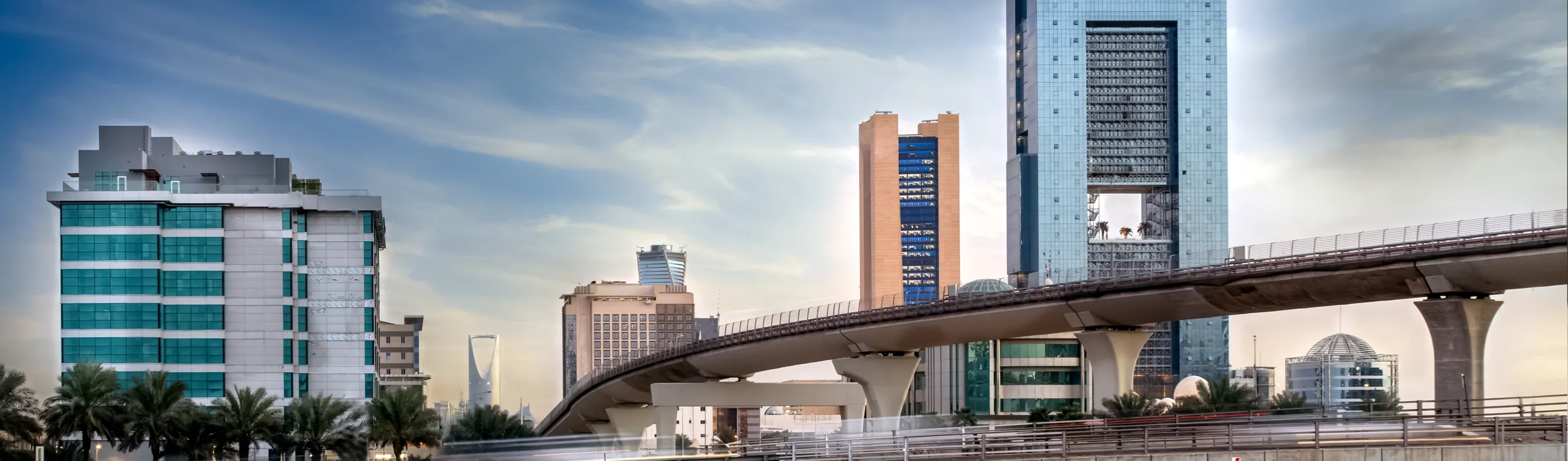
Riyadh's office market is one of the region's most dynamic. Vision 2030 has driven significant occupier demand, with government entities, financial institutions and multinationals all expanding their presence in the capital. Prime Grade A space is genuinely scarce in established locations, and that constraint is supporting strong rental growth and positive revaluation outcomes for well-positioned assets.
The retail market is changing. Saudi Arabia's traditional mall-centric model is giving way to more mixed-use, experience-led formats. Valuing retail assets in this environment requires careful assessment of income sustainability, anchor tenant quality and the competitive dynamics of the local catchment.
Industrial and logistics is a growing focus. The development of the non-oil economy under Vision 2030 is driving demand for modern logistics facilities, creating an asset class where Knight Frank's specialist team has developed growing expertise.
Foreign ownership rules have been progressively revised, and that change is beginning to bring international institutional capital into a market that was previously more restricted. Demand for independent, internationally recognised valuations is increasing as a result.
What this means for UAE and MENA
For regional investors based in the UAE, Saudi Arabia represents one of the most significant opportunity sets in MENA right now. The market is less transparent than Dubai in terms of published transaction data, which makes independent professional valuation more important as a basis for pricing decisions.
Investors who rely on informal market estimates in KSA take on valuation risk that is avoidable. An independent, evidence-based assessment from a firm with on-the-ground market knowledge is the responsible starting point for any serious commitment of capital.
Knight Frank's approach
Knight Frank has a dedicated team in Saudi Arabia with RICS-accredited valuers experienced across all major commercial asset classes in the Kingdom. We produce valuations in line with both RICS Red Book and Taqeem standards, depending on the client's requirements. Our research team publishes regular analysis of Riyadh and Jeddah's commercial markets, providing the evidence base that directly informs our valuation work.
Frequently asked questions
The core methodology is the same as in other MENA markets. Income-producing assets are valued on a capitalisation or DCF basis. Development of land and assets without established income are addressed using comparable evidence and residual appraisal. Valuations must comply with either RICS Red Book or Taqeem standards depending on the client and purpose.
Location is the primary driver, with assets in the King Abdullah Financial District, Olaya corridor and established CBD locations commanding significant premiums. Building specification, sustainability credentials, tenant covenant quality and the supply-demand imbalance in prime Grade A space are the other key factors.
The outlook for prime office, logistics and mixed-use assets in Riyadh remains positive. Vision 2030-driven demand continues to support occupier activity, and increasing foreign investor interest is improving market liquidity and transaction evidence.
Contact our Commercial Valuation team to discuss your requirements.