
Branded residences in Ras Al Khaimah: what’s driving demand?
Tourism growth, premium performance and evolving buyer behaviour are positioning Ras Al Khaimah as the UAE’s next branded residential hotspot.
04 January 2026

Over the past 12 months, branded residences have emerged as one of Ras Al Khaimah’s most compelling real estate asset classes, supported by strong sales prospects and rising investor interest.
While Dubai remains the global capital of branded residences, with a supply of approximately 39,000 units, Ras Al Khaimah has positioned itself as a clear runner-up. More than 5,000 branded residential units are expected to be completed before 2030, underscoring the Emirate’s growing appeal to developers, investors and global brands.
Tourism and population growth underpin long-term demand
Ras Al Khaimah’s population is forecast to grow by more than 50% by 2030, supporting sustained residential demand. At the same time, the Emirate is consolidating its position as a regional tourism hub by combining sun-and-sand leisure with mountain, adventure and MICE-compatible offerings.
Major developments, including the Wynn Resort, expected to open in 2027, are set to elevate Ras Al Khaimah’s international profile. These projects are likely to generate additional repeat visits, strengthen brand recognition and support long-term demand for hospitality-led residential real estate.
Buyers are gravitating towards service-led living
According to our latest survey of global HNWI, service provision and physical amenities are the primary drivers of branded residential demand, cited by 63% of respondents. Building maintenance and management, along with yield and investment potential, ranked joint second at 59%.
These priorities reinforce the appeal of branded residences in RAK, where professionally managed, service-backed homes align closely with buyer expectations around lifestyle quality, asset protection and long-term value.
How branded residences are reshaping investment dynamics
Off-plan sales volumes for branded residences continue to rise, with branded schemes capturing a growing share of transactions and commanding clear price premiums over non-branded inventory.
While Ras Al Khaimah was traditionally viewed as a more affordable alternative to Dubai, the introduction of established luxury brands like Ritz-Carlton, JW Marriott and Nobu reflects a shift in positioning. The Emirate is increasingly considered an ‘alternative luxury’ destination, broadening its buyer base and deepening overall market activity.
These demand fundamentals, combined with comparatively affordable land values, are attractive to developers. As beachfront opportunities become scarcer and capital values rise elsewhere in the UAE, Ras Al Khaimah is emerging as a natural alternative, drawing capital from Asia, Europe and other global markets.
Both hospitality and lifestyle brands are active in the market, including new offerings from the luxury and automotive sectors. Despite favourable conditions, partnering with the right brand remains critical to achieving successful and sustainable sales outcomes.
Premium pricing, faster sales and stronger returns
Over the past six months, branded residences in Ras Al Khaimah have continued to outperform non-branded properties across pricing, sales velocity and projected rental levels. This reflects a broader shift towards service-led, hospitality-focused residential real estate.
As the market matures, buyers increasingly benchmark Ras Al Khaimah against Dubai. The fact that branded homes in Dubai achieved premiums of 114% over the mainstream residential market in Q1 2025, compared to a global average of approximately 20-40%, is fostering confidence in Ras Al Khaimah’s long-term growth trajectory.
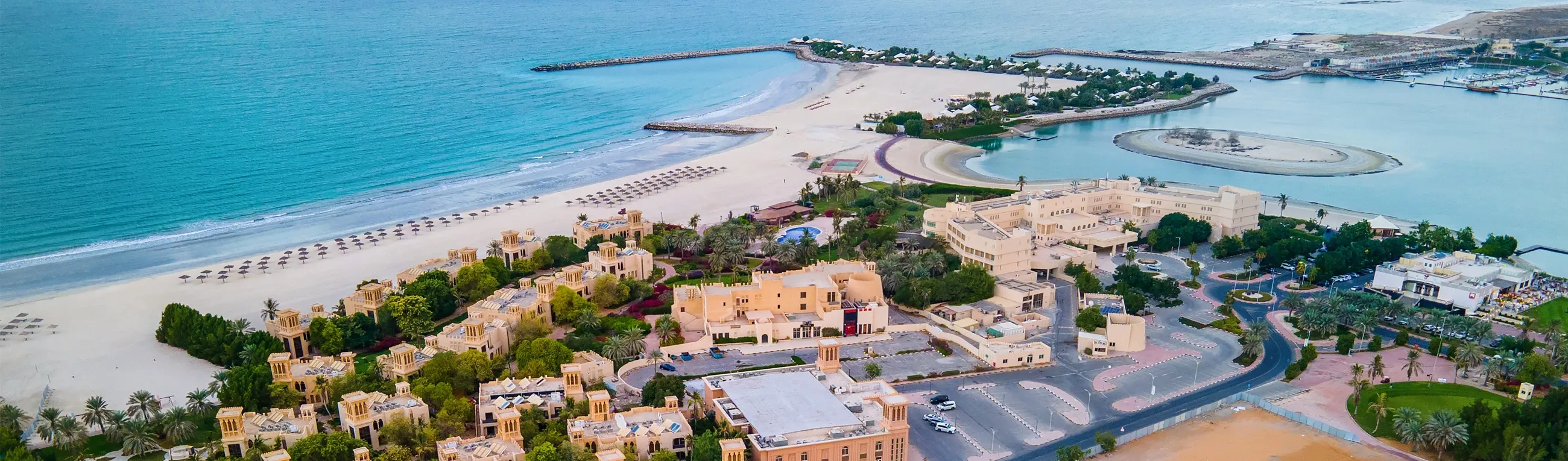
More than 50% of branded residences in the Emirate are located on Al Marjan Island, where the waterfront location supports higher prices. Branded homes on the island currently achieve premiums of between 35% and 50% compared to non-branded alternatives.
Investor returns are typically structured through rental pool agreements, enabling owners to lease units back to hotel operators under defined terms. This model is supported by a resilient hospitality market, with RevPAR in Ras Al Khaimah increasing by 9% year-on-year in the first half of 2025.
From emerging segment to established market
The performance of branded residences in Ras Al Khaimah reflects a market transitioning towards maturity. Strong tourism fundamentals, rising population levels and growing brand diversity are creating a robust platform for sustained demand.
For developers, investors and global brands, Ras Al Khaimah’s real estate market offers a compelling combination of scale, affordability and lifestyle appeal. As the Emirate continues to evolve, branded residences are set to remain a defining feature of its luxury real estate landscape.
Our advisory team supports each stage, from concept and positioning to operations and launch.