
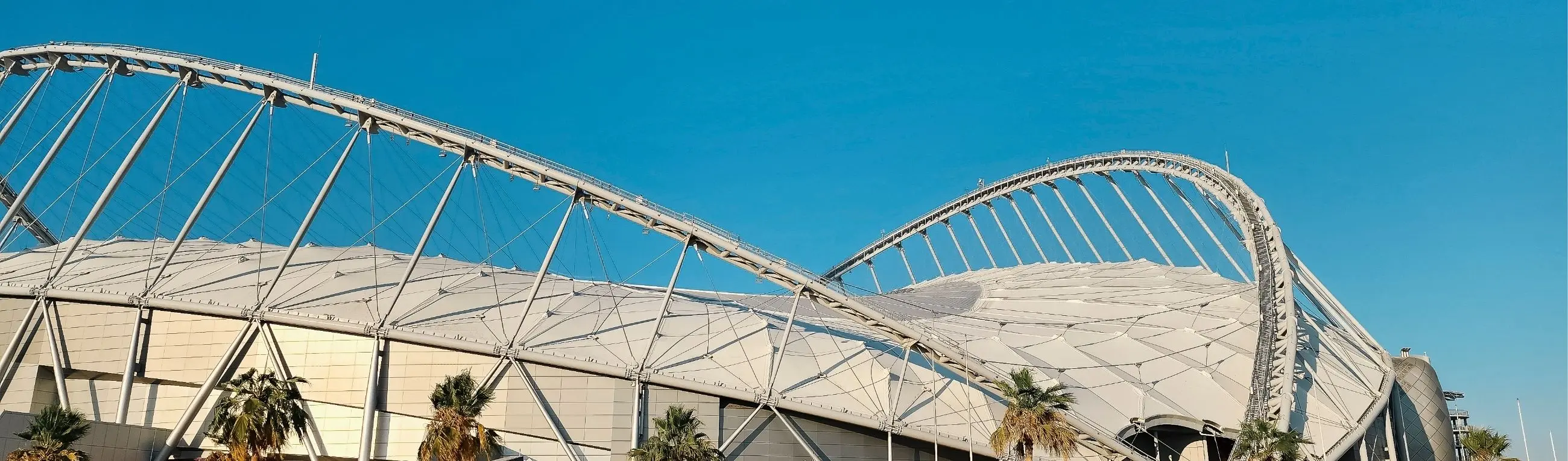
How the Middle East can deliver stadiums that leave long-term value
Why refurbishment, design governance and operational planning are becoming central to sustainable stadium development across the region.
10 November 2025
Major sporting venues play a defining role in the identity of a nation. They welcome global audiences and, when planned effectively, serve communities for decades.
They also demand significant resources. For that reason, sustainability can no longer sit at the margins of stadium development; it must be embedded from the outset.
Across the Middle East, this shift is already underway. By prioritizing refurbishment where possible, strengthening design governance and planning for long-term operational performance, the region is demonstrating how major venues can deliver enduring value rather than short-lived spectacle.
Renovation as a first choice: A case study
During the delivery of the FIFA World Cup in Qatar, the redevelopment of Khalifa International Stadium focused on upgrading the venue to meet modern FIFA standards. Originally completed a decade earlier, the stadium architecture retained substantial elements of the existing structure while achieving the performance requirements needed for the World Cup.
This approach delivered both immediate and long-term benefits. Retaining key structural components avoided unnecessary carbon impact and protected existing assets. Particular attention was paid to the stadium envelope, which shapes both the first impression for spectators and the viewing environment within the bowl.
Clarity of design structure proved essential. Once responsibilities were clearly defined and stakeholders understood the implications of design decisions, coordination improved and delivery accelerated. The project demonstrated that refurbishment, when governed effectively, can be both a sustainable and operationally sound approach.
Design quality as a sustainability driver
A later World Cup stadium followed a different delivery model through a full Design and Build contract, placing responsibility for both design development and delivery with the project team from the outset.
This approach brings designers, engineers and site teams together early, allowing performance requirements – such as comfort, energy efficiency, buildability and architectural intent – to be resolved before construction begins. The result? Operational demand reduces, and the programme delivery improves.
This approach reinforces a principle that applies across all major sports venue construction. Sustainability improves when design intent, responsibility and risk are clearly aligned from day one. Early clarity reduces late-stage change, decreases resource waste, minimizes delays and supports more predictable performance once a stadium is operational.
Sustainability as a regional expectation
Across the Guld, sustainability is increasingly shaping how major infrastructure is planned and delivered. Stadium projects are now being aligned with wider national commitments, including Saudi Vision 2030 and UAE Net Zero 2050.
Performance is no longer assessed solely at the point of delivery. Carbon impact across the full lifecycle, responsible water use and venues’ ability to adapt over time are becoming central considerations.
Major events remain important milestones, but developers must leave behind assets that continue to serve communities. A stadium designed only for a single tournament is no longer an acceptable outcome.
One of the clearest indicators of this progress is the growing preference for refurbishment where feasible. Saudi Arabia’s plans for the 2034 FIFA World Cup include a combination of new and redeveloped venues, with upgrades to existing stadiums forming a core part of the strategy. Renovation and smart stadium technology are now the climate-conscious and economically-sound paths.
What shapes a successful delivery?
The most effective sustainability outcomes are often driven by the fundamentals that receive less attention.
Design coordination must happen early and be properly tested. Responsibilities must be clearly defined. Programmes must be realistic and shared with stakeholders.
Construction outcomes improve significantly when adequate time is allocated to planning before work begins on site. When design intent and procurement routes are fully understood, delivery becomes more certain and less resource-intensive. Efficient use of materials and disciplined scheduling are not separate sustainability measures; they are the result of strong project governance.
Setting a global benchmark
Mega-events attract global attention, but lasting success is measured by what remains long after the final match.
Across the Middle East, stadiums are being designed to support local communities, reduce long-term operating costs and meet international sustainability expectations.
As sporting events continue to be hosted in the region, the infrastructure that support them must be planned with long-term value in mind. By prioritizing renovation, and integrating design and delivery from the outset, venues will remain relevant, efficient and adaptable well beyond a single event.
Our specialists provide end-to-end oversight to keep complex developments aligned, controlled and on track.